
Journal
The Camera Watched My Mother. It Never Talked to Her.
By Chris Sachs, Co-Founder
Published August 20, 2026 · Last updated August 20, 2026
This piece is a personal essay, not a product review. cobesa has no relationship with any monitoring, camera, or robotics company mentioned or implied here.
The call always came the same way. She'd fallen, or she was scared, or the stove had been left on. My sister carried plenty of this too, but for whatever reason, I was the number Mom reached for first.
That was the last year or so of my mother living alone, before the dementia had progressed enough that a nursing home became the only honest option. I'm not going to walk you through that year in detail. It's hers more than it's mine to tell, and the details aren't the point. The point is the shape of it, because I think that shape is the actual problem cobesa exists to help with, and I don't think most people outside it understand what that shape looks like from the inside.
Here's what it looked like. It was a phone that could ring at any hour, for reasons that ranged from real emergencies to a memory of an emergency that had already passed. It was buying cameras for her apartment, the same ones anyone would buy, so I could check if she'd left the stove on or wandered toward the door. It was the same question, asked five times in twenty minutes, and me running out of patience by the fourth one, which is its own kind of guilt that doesn't go away.
It was being the only safety net for someone who needed one at 2 a.m. as easily as at 2 p.m., while also trying to hold down a job and a family of my own, and knowing my sister was carrying the same weight from her end.
The cameras helped with exactly one thing: they let me see. They didn't help with the other thing, which was that my mother was alone for hours at a time with nothing and no one to talk to, in a mind that was actively losing its grip on where she was and who'd already called that day. A camera is a very good way to find out something bad happened after it happened. It is not a way to prevent it, and it is definitely not a way to keep someone company.
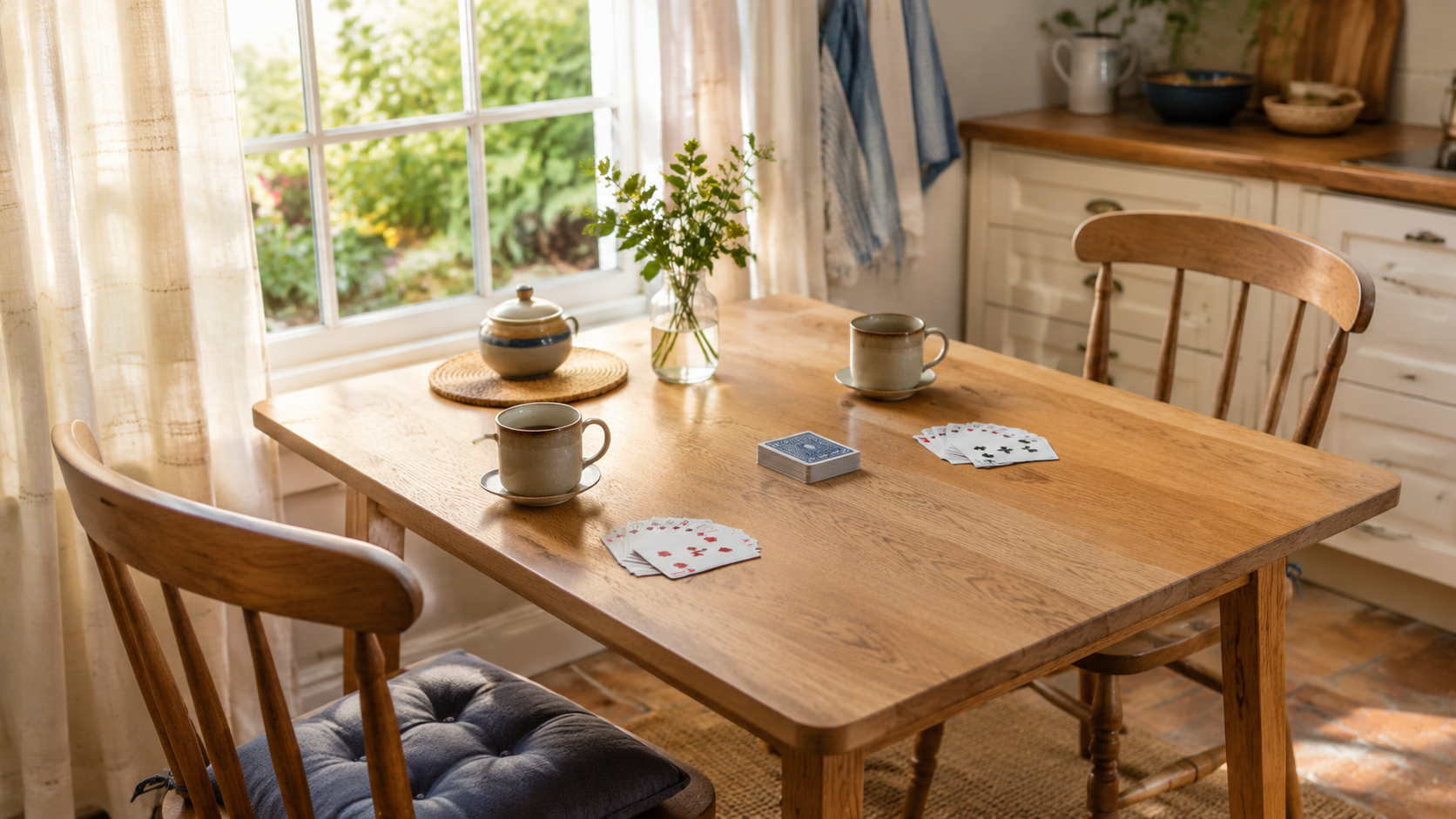
That's the gap. It's not "we need better cameras." It's that safety monitoring and companionship are two completely different jobs, and right now a family in that situation has to cobble together both from scratch, usually badly, usually exhausted, usually feeling like they're failing at both. What actually would have helped wasn't more surveillance. It was something with the patience I didn't always have, that could sit with her and play cards or just talk, the same conversation as many times as she needed it, without ever making her feel like a problem to be managed. Something that noticed a fall or an open stove and did something about it immediately, not something I found out about after the fact from a camera feed I wasn't always watching. Something that made an apartment feel less alone, instead of just more observed.
I want to be straight with you about where the technology actually is on this. I'm not writing this to tell you a robot would have fixed my mother's last year, because that's not true yet, and cobesa doesn't exist to tell people comforting things that aren't true. What I am telling you is that this is exactly the shape of need this category is aiming at, whether or not anything on the market today is ready to fill it responsibly. Families managing a parent's decline at home are living the gap between "needs full-time care" and "needs someone checking in twice a day," and that gap is where a lot of the real promise, and a lot of the real risk, of this whole category lives.
This is why cobesa cares about elder care as a use case, not as a marketing angle, but because I lived the version of it that didn't have good options. When we evaluate anything claiming to help with this, we're going to ask the questions a family in that 2 a.m. call actually needs answered: does it monitor honestly, does it alert fast enough to matter, and does it treat the person it's watching like a person, not a liability. Anything less than that isn't worth a family's trust, and it isn't worth mine either.
Plenty of families are in the middle of their own version of that year right now, holding it together with cameras, phone calls, and patience they ran out of days ago. If this category ends up building something that gives them a little more help and a little less fear, that's worth building. That is the standard cobesa intends to hold these robots to.
Keep reading