
The Team
The People Behind cobesa
Three founders. Nearly two decades working together. One opinion: this category needs a buyer's guide, not a hype machine.

Chris Sachs
Co-Founder
I came up with grease under my fingernails, learning how machines behave instead of how they get advertised.
I went to Universal Technical Institute, earned my ASE certification, and spent about ten years in the automotive industry. That is a different kind of education. The brochure ends, the warranty begins, and you stop believing what a thing is supposed to do and start paying attention to what it does at 90,000 miles, on a cold morning, with a customer who is already mad.
I also happen to be an early adopter. Not always the smartest adopter. Just early.
I had one of the first Motorola StarTAC flip phones, back when pulling a phone out of your pocket felt like whipping out a garage door opener NASA built. I had the iPhone 3G. I have the smart speakers, the smart lights, the smart appliances, and enough little glowing boxes in my house that my electric panel probably thinks I run a regional airport. Years ago I said out loud, I just want to walk into my house and have stuff start turning on and doing things on its own. That is still the dream. So yes, of course I want a robot. But wanting the robot and trusting the robot are not the same thing.
What happened between the service bay and the boardroom is the part I am proud of, even with all the executive bingo words that now follow me around like a Roomba with a LinkedIn account. I went from turning wrenches, to managing the luxury customer experience at an Acura dealership, to almost fifteen years in enterprise software, most of it around AI and getting customers to real value after the contract is signed. I earned a few rooms along the way. I have negotiated in Tokyo through a translator, worked deals in Berlin and London, and stood on stages in front of a few thousand people. None of it was handed to me. I am wired to outwork the problem, and I really, really like to win.
But the wrench never left. A demo is nice. A polished video is nice. A feature list is nice. The questions that matter are the boring ones. What does it actually do? What happens when it breaks? Who fixes it? What does it cost to own? Is it useful, or is it expensive theater with a charging cable?
I spent a short but meaningful stretch at Hammacher Schlemmer too, helping rebuild the website inside a company known for unusual products and for actually testing them before calling them good. That left a mark. But the throughline of my whole career is simple. I chase new technology, then I help people figure out whether it delivers.
Humanoid robots need exactly that treatment. cobesa exists because this category is exciting, confusing, and already a little too comfortable with fog machines. We are here to answer the questions real buyers are asking. What does it do? Who is it for? What does it cost? What is real today? What is not ready yet? What goes wrong?
Because yes, I want the robot. But before I bring one home, I want to know if it is actually helpful.
And if it is not ready yet? We will say that too.

Fred Berns
Co-Founder, Standards Lead
I'm no stranger to innovative technology. As the President of Hammacher Schlemmer, I had the enviable position to discover all sorts of new-to-this-world, extraordinary products that piqued the imagination, from The Digital Trumpet and The Flying Hovercraft to The Segway Personal Transporter and the Submarine Sports Car.
With the Hammacher Schlemmer Institute, I oversaw the determination of The Best of everyday products: The Best Cordless Handheld Vacuum, The Best Automatic Wine Opener, The Best Electric Shaver. Problem-solving products for which there were so many options, consumers had a tough time discerning which was truly The Best.
I remember when Hammacher Schlemmer helped introduce the robotic vacuum to the world. Quaintly, by today's standards, what it could do was extraordinary. It's funny to think.
Today, with the advent of humanoid robots, there's so much that sounds exhilarating, incomprehensible, and even scary. Will they come to destroy us or make our lives immensely easier? I am overwhelmed with excitement at what the next decade will bring. AI chat engines have been astounding. What humanoid robots can already do is super impressive. And the combination of these two technologies means life in 10 to 20 years from now will be nothing like it is today.
But there is so much hype and promise about today's robots that it's hard to separate fact from fiction, and science fiction. Are they going to be doing warehouse and factory jobs or will they be doing my laundry? Are there robots today that are appropriate for use in my home, or is that a long way off?
That is why we started cobesa. To figure out what home robot capabilities really are. Not which actuators and servos they use, but what can they DO. What can they do today, and what is the outlook for when you can get one in your home that will actually be helpful? And then, with all the noise and hype, how do you choose the right one for the jobs you want it to do?
Come along on our journey as we separate fact from fiction and reality from hype in our search for Rosie.
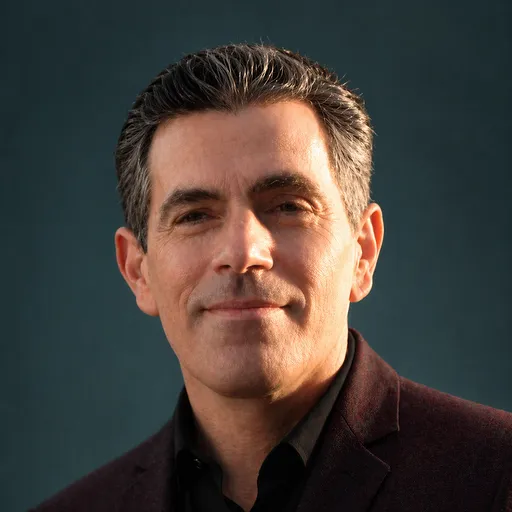
Henry Coleman
Co-Founder
My first company was a credit union.
I was in school, the banks had no interest in student accounts, so we built the option that did not exist. By senior year the Illinois Student Federal Credit Union held more than two thousand student accounts and ran on a staff of forty, offering checking, savings, ATM access, and loans. Real money, real members, real consequences for getting it wrong.
That set the pattern. Somebody is not being served. Build the thing that serves them.
After that I started companies the way other people change jobs. From a data trading in New Orleans to six e-commerce brands, selling safety equipment, wine accessories, vacation rentals, picnic gear, and ironwork from a storefront in Chicago. Anything I could source, build a site around, and ship. I did the merchandising, the code, the customer service email, and on bad weeks the packing tape.
Then came Hammacher Schlemmer, which is where the three of us found each other. Fred was running the company. Chris was rebuilding the website. I built the e-commerce department, worked with a great team to transition from print to digital marketing, and chaired the company's first IT steering committee.
At this point, I am mostly a builder. I vibe code every day. I would rather ship a thing than describe it.
Chris and I started talking one day about how many technology waves we had watched from the sidelines. Not missed exactly. Watched. Read about, admired, showed up for late. Humanoid robots are the next one, and neither of us was willing to be a spectator again. Nobody was publishing the guide we wanted to read. So we are back to the pattern.
Be early, never foolish. I have been both. This site is the part where I try to spare you the second one.
cobesa is independent, editorially driven, and not for sale.
No manufacturers fund our research. No brands approve our verdicts.
Be Early. Never Foolish.