
What this is: an independent, evidence-based starting point for understanding the humanoid robot market. cobesa tests the job, not the spec sheet, and says so plainly when the evidence isn't there yet. No vendor pays for placement here, and no score is for sale.
What is a humanoid robot, and why would you actually buy one?
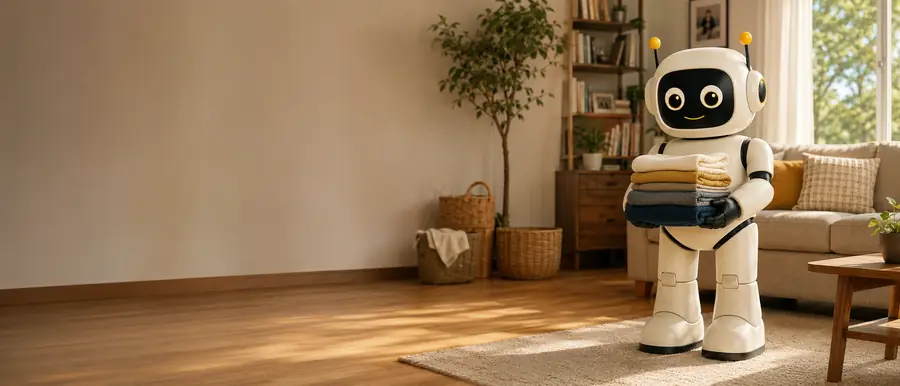
A humanoid robot is a machine built in roughly human shape, two arms, two legs or a wheeled base, hands, cameras, and an onboard computer, so it can move through a house that was designed for people and use the same doors, stairs, and tools you do.
That body shape is the whole pitch. Your home wasn't built for a Roomba's worldview. It was built for something with hands that can reach a light switch, carry a laundry basket, and step over the dog. A humanoid is a bet that the cheapest way to automate a human space is to build something human-shaped, rather than re-plumb your house for a hundred single-task gadgets. Plenty of homes already have a panel full of those gadgets, and an electric meter that acts like it's powering a small airport.
So why buy one. Three honest reasons hold up in 2026. The first is relief from physical drudgery: the fetching, tidying, and "go grab that" tasks that eat your evening. The second is presence and telepresence: a set of eyes, ears, and simple hands you can check in through when you're not home, which matters for a lot of people watching an aging parent or an empty house. The third is plain early-adopter pull: you want to live a little bit in the future, and you've got the money to fund the experiment. That's a real reason. It's just not the same reason as "it'll do my chores," and confusing the two is how people overspend.
Here's the part the keynote videos skip. A humanoid robot in 2026 is closer to an eight year old with an Easy-Bake Oven than a hired housekeeper. It can do real things, supervised, on a good day, and it gets better with software updates. It also still phones a remote human for help when it gets stuck. The 1X NEO, the most consumer-ready machine on the market, leans on exactly that: a human operator in "Expert Mode" takes over for tasks the AI can't finish on its own. That's not a knock. It's how the technology learns. But you should know you're buying a robot that sometimes drives itself and sometimes gets driven.
What should you figure out about yourself before you shop?
Before you look at a single robot, get honest about the job you're hiring it for, your tolerance for beta software, and whether a $20,000 machine is solving a real problem or scratching a shiny-object itch. Most buyer regret in this category starts here, not at the spec sheet.
cobesa comes at this from the service bay, not the showroom. Years spent around cars, service writers, and warranty claims teach you to ask the boring questions before you fall for the demo. What does it actually do? What happens when it breaks? Who fixes it? What does it cost to own? Run a humanoid robot through those four questions and most of the fog burns off. Here are the gut-checks worth doing before spending a dime.
Name the one job, out loud
"I want a robot" is not a job. "I want something to carry laundry up from the basement, fetch things while I'm on a call, and let me check on my dad's living room when I'm at work" are jobs. Write yours down in plain English, as specifically as possible. If your job involves cooking a real meal, folding a random pile of laundry, handling fragile dishes, watching a toddler, or physically supporting an elderly person, stop now. None of that is reliable today, and a robot bought for fan-fiction tasks is a robot that disappoints you in week two.
Check your tolerance for beta
Every consumer humanoid shipping in 2026 is, functionally, a beta product that improves over time. Updates will add skills. Things will also break, freeze, and occasionally need a remote operator. If you're the person who returns a phone over a buggy update, this category will make you miserable. If you genuinely enjoy living on the edge of a technology and helping it grow up, you're today's target customer, but you should still go in with eyes open.
Decide who else lives with this decision
A humanoid is five-and-a-half feet of camera-and-microphone-equipped machine that walks around your home. Everyone who lives there has a vote, and so does your sense of privacy. The 1X NEO ships with "no-go" zones and face-blurring controls, which tells you the makers know this is the real objection. Before you buy, settle the household question and the data question. A robot nobody else wants in the living room is an expensive argument.
If you can't name a specific job, you don't have a tolerance for beta, and the household isn't on board, the right move in 2026 is to wait. Waiting costs you nothing. The technology and the price are both moving in your favor, fast.
How much does a humanoid robot cost to buy in 2026?
For a home-oriented machine, plan on about $20,000 to buy a 1X NEO or $499/month to subscribe (6 month minimum subscription). Developer platforms range from roughly $5,900 for a Unitree R1 to $16,000 and up for a Unitree G1, with research configurations climbing past $70,000. The machines most people have heard of, Tesla Optimus and Figure, you cannot buy as an individual at any price.
Here's the lay of the land as of mid-2026. Notice how few of these are actually pointed at your living room.
| Model | Starting price | Who it's really for | Availability |
|---|---|---|---|
| 1X NEO | $20,000or $499/mo | The home. Light tasks, telepresence, presence. Remote-operator assist included. | Pre-order |
| Unitree R1 | $5,900 | Developers, hobbyists, entertainment. No functional household hands, ~1 hr battery. | Buyable |
| Unitree G1 | $16,000 EDUto $73,900 | Developers, researchers, event spectacle. A platform, not an appliance. | Buyable |
| Tesla Optimus | $20k–$30k* | Target consumer price, but factory-internal today. *Not a real retail figure yet. | Not for sale |
| Figure 03 | Enterprise | Factories (BMW partnership). Not sold to individuals. | Not for sale |
| Apptronik Apollo | Enterprise | Industrial and logistics pilots. Not sold to individuals. | Not for sale |
Two traps live in that table. The first is the cheap-number trap. A Unitree R1 at $5,900 is genuinely affordable, but it's a developer's athletic platform with non-functional display hands on many units, not something that'll tidy your kitchen. The low price buys you a different product, not a discount on the home robot. The second is the vaporware trap. Tesla Optimus has a tantalizing $20,000-to-$30,000 target and zero units in civilian hands, with consumer sales aimed at 2027 at the earliest. A price you can't pay isn't a price. It's a press release.
Any home-task capability claim for Tesla Optimus, Figure 03, or Apptronik Apollo as a consumer product is unverifiable in 2026, because no consumer has one. We score what's deployed, not what's promised on a stage. When that changes, this guide changes.
What does a humanoid robot really cost to own?
The purchase price is the down payment on the real bill. True cost of ownership for a humanoid robot in 2026 includes the AI service it can't run without, connectivity, electricity, repairs you can't yet schedule, insurance nobody's written for you, and depreciation with no resale floor underneath it. Budget for the stack, not the sticker.
This is the part of car-buying nobody enjoyed and the part that saved people the most money: the total-cost-of-ownership math. A $20,000 robot is not a $20,000 decision. Here's the stack cobesa puts in front of every buyer.
Add it up and the honest framing is this: a $20,000 humanoid is a multi-year commitment to a maker who's still building the service-and-support muscle behind it. That's not a reason to never buy. It's a reason to buy from a company you trust to still be standing, and supporting your unit, three years from now.
Cash, subscription, finance, lease, or used: how should you pay for one?
In 2026 you have two real consumer paths: pay cash (around $20,000 for a 1X NEO) or subscribe (around $499 a month, which functions like a lease). True leasing and dealer-style financing exist mostly on the industrial side, and a used market for consumer humanoids essentially does not exist yet. How you pay should match how confident you are.
Paying cash, or outright
Buying a 1X NEO outright at $20,000 is the cheapest path over time and gives you the cleanest ownership. It also concentrates all the risk on you: if the model stalls, the service changes, or you simply don't use it, that money is spent. Pay cash if you're a committed early adopter who'd rather own the hardware than rent it, and who can treat $20,000 as the cost of an experiment, not a household budget line you'll resent.
Subscribing (the de facto lease)
The 1X NEO subscription at $499 a month is the closest thing to leasing a robot, and for most first-time buyers it's the smarter risk posture. You pay more if you keep it for years, but you can get out, and you ride along on hardware upgrades instead of owning a machine that ages under you. Think of it like leasing a first-generation anything: you're paying a premium to not be stuck with version one. Read the cancellation and minimum-term terms closely. The exit ramp is the whole point of subscribing.
Financing it
There is no clean, maker-backed consumer financing desk for humanoids in 2026, the way a dealership finances a truck. Some financing exists for bulk and business orders through third parties. As a consumer, financing a humanoid means a personal loan, a card, or a home-equity line, on your own terms and your own risk. Here's the blunt version: you'd be financing a fast-depreciating gadget with no resale value. If you can't comfortably pay cash or absorb the subscription, that's the market telling you to wait, not to borrow.
Leasing (real leasing)
Genuine equipment leasing and robot-as-a-service exist, but on the commercial side. Industrial machines like Agility's Digit go to warehouses on lease-style arrangements precisely so a business can prove the return before committing. For a homeowner, the consumer subscription is your lease. If you're a small-commercial buyer (a showroom, club, or restaurant eyeing a Unitree G1 as a greeter), ask about rental and event-day arrangements, which are real and often the right call over buying.
Buying used
Don't, at least not yet. There's no real secondary market for consumer humanoids, and the reasons are structural: the machine depends on a cloud service tied to the original buyer, warranties don't transfer cleanly, and a discontinued model can lose support entirely. A used 2026 humanoid risks being an orphan, an expensive statue that worked until the service stopped recognizing it. If a used unit ever does tempt you, verify transferable service and support in writing before money moves, full stop.
First-time home buyer who's curious but not certain: subscribe. Committed early adopter who wants to own the experiment and can eat the risk: pay cash. Everyone else: wait. Financing and used are not where this category is, in 2026.
How do you compare two humanoid robots without a spec sheet?
Ignore degrees of freedom, torque density, and TOPS. Compare humanoids on six things that decide whether the machine helps you or haunts you: what it does today, who stands behind it, what it costs to own, how it fits your space, who it's right for, and what goes wrong. This is the cobesa rubric, and it's the same lens we score every robot through.
The manufacturers want you comparing spec numbers, because spec numbers are where the demo wins. You want to compare outcomes, because outcomes are where you live. When you've got two robots side by side, score each one out of 5 on these six dimensions. Anything you can't verify, mark "insufficient evidence" and treat the blank as a risk, not a neutral.
Verified, deployed capability, not staged video. Can it complete real tasks unsupervised, or does a remote operator finish the job? How challenging is its ability to learn to execute tasks in your environment? Count what it does on a Tuesday, not what it did once on a stage.
The company behind the product. How long have they been around, how well funded are they, what other successful products do they have? Does a service network exist? A robot is a multi-year relationship. Will the maker be around, and supporting your exact unit, in three years?
The full stack from Section 4: purchase or subscription, the AI service, connectivity, repairs, insurance, and depreciation. The cheapest sticker often hides the most expensive ownership.
Size, weight, noise, charging footprint, and whether it belongs in a living room or feels like an intruder. A 2026 humanoid that's tolerated, not welcomed, gets unplugged.
A developer platform and a home helper can look identical in a photo and serve completely different buyers. Match the robot to your job from Section 2, not to the marketing.
Failure modes, parts availability, support turnaround, and the bricking risk if a model is discontinued. Ask what breaks and who shows up before you ask what it can do.
Which buyer are you, and should you buy at all?
Most people reading this guide should wait. A few should subscribe to a 1X NEO. A specific handful, small-commercial buyers and developers, have a clear "buy" today. Find your motivation below and read the verdict honestly, because the most useful thing a buyer's guide can do is talk the wrong buyer out of the purchase.
You're the early adopter who'd buy the first version of anything. A 1X NEO at $20,000 is a real, ownable robot that does light tasks and telepresence and improves with updates. Go in expecting a science project that fetches and watches, not a maid. Pay cash if you want to own it. Subscribe if you want an exit.
Buy, eyes openYou're tired and you want the laundry, dishes, and tidying handled. Manage this expectation hard: 2026 humanoids do light fetching and tidying, with a remote operator backstopping the tough stuff. Cooking and reliable laundry are years out. Before you spend anything, read which chores they actually do, task by task. If you still want in, subscribe so you can bail when reality meets the marketing.
Subscribe or waitThis is the use case cobesa cares about most, which is exactly why we won't oversell it. A humanoid can offer presence, reminders, fetching, and a way to check in remotely, and that's genuinely valuable. It cannot catch a fall, lift a person, or replace a caregiver, and the safety bar here is far higher than a warehouse. Treat it as a supplement to human care and your existing safety tech, not a substitute.
Supplement, never substituteYou want a greeter, a spectacle, a memorable first impression. A Unitree G1 or H2 as a conversational greeter is real, and you can often rent one for an event before you ever buy. Don't expect labor. Expect attention, novelty, and a story your guests tell. Compare rental against purchase before you commit capital.
Rent first, then buyYou want to build on the platform, not be served by it. A Unitree R1 (~$5,900) or G1 (~$16,000) is the right tool, with an open SDK and a real community. Just buy it knowing it's a kit and a research platform, not a household helper. The price reflects the product.
Buy the platformIf you've read this far and you still can't name a specific job, you don't relish beta software, or the household isn't sold, the answer is the easiest one in this guide. Wait. The robots get better and cheaper every quarter, and there's no resale market punishing your patience. Waiting is a strategy, not a failure.
WaitThe disqualifications, stated plainly: do not buy a 2026 humanoid for autonomous cooking, reliable folding of arbitrary laundry, fragile-object handling, childcare, or unsupervised physical care of an elderly person. None of it is real yet. A robot bought for those jobs is a robot bought to disappoint you, and cobesa would rather talk you out of the purchase than have you buy regret.
This guide is part of the cobesa guide library, which covers cost and financing, warranties and service, the software and apps that run them, safety, and privacy for home buyers.
Common questions, answered straight
Where this leaves you
In 2026, the honest read is simple. A small number of buyers with a specific job and an appetite for beta should consider a 1X NEO, by subscription if they want an exit and cash if they want to own the experiment. A few small-commercial and developer buyers have a clear path. Almost everyone else should wait, and waiting costs nothing.
This guide is a starting point, not a sales pitch. The goal is to get you to a decision you won't regret, whether that decision is to buy the right machine for the right job or to keep your money in your pocket while the category grows up. cobesa keeps this guide current as prices, availability, and real capability move, so the dates at the top are a promise: what you just read was true the day it was last verified.
Why trust this guide?
cobesa was founded by people who have spent their careers helping consumers buy products that are expensive, unfamiliar, and hard to evaluate before you own one. That includes years at Hammacher Schlemmer, the company whose entire reputation was built on finding the best, the only, and the unexpected, and then telling customers the truth about what was worth the money and what wasn't. It includes years in automotive service, where the question was never "does it look good on the lot" but "what happens at 60,000 miles when the warranty runs out." And it includes over a decade in enterprise software, where the real job was helping buyers separate what a technology promises from what it actually delivers after the contract is signed.
Humanoid robots sit at the intersection of all three: high-consideration consumer products, machines that need servicing, and software platforms that evolve after purchase. cobesa exists because that combination demands the kind of guidance nobody in this category is providing yet.
For detailed scoring, head-to-head comparisons, and formal verdicts on specific robots, visit the cobesa verdicts page as that program rolls out. This guide is the starting point. The verdicts are where cobesa puts numbers behind the opinions.